
Support the Kumbhābhiṣekam of Sri Varaguṇamaṅgai (Nattham) Divya Deśam
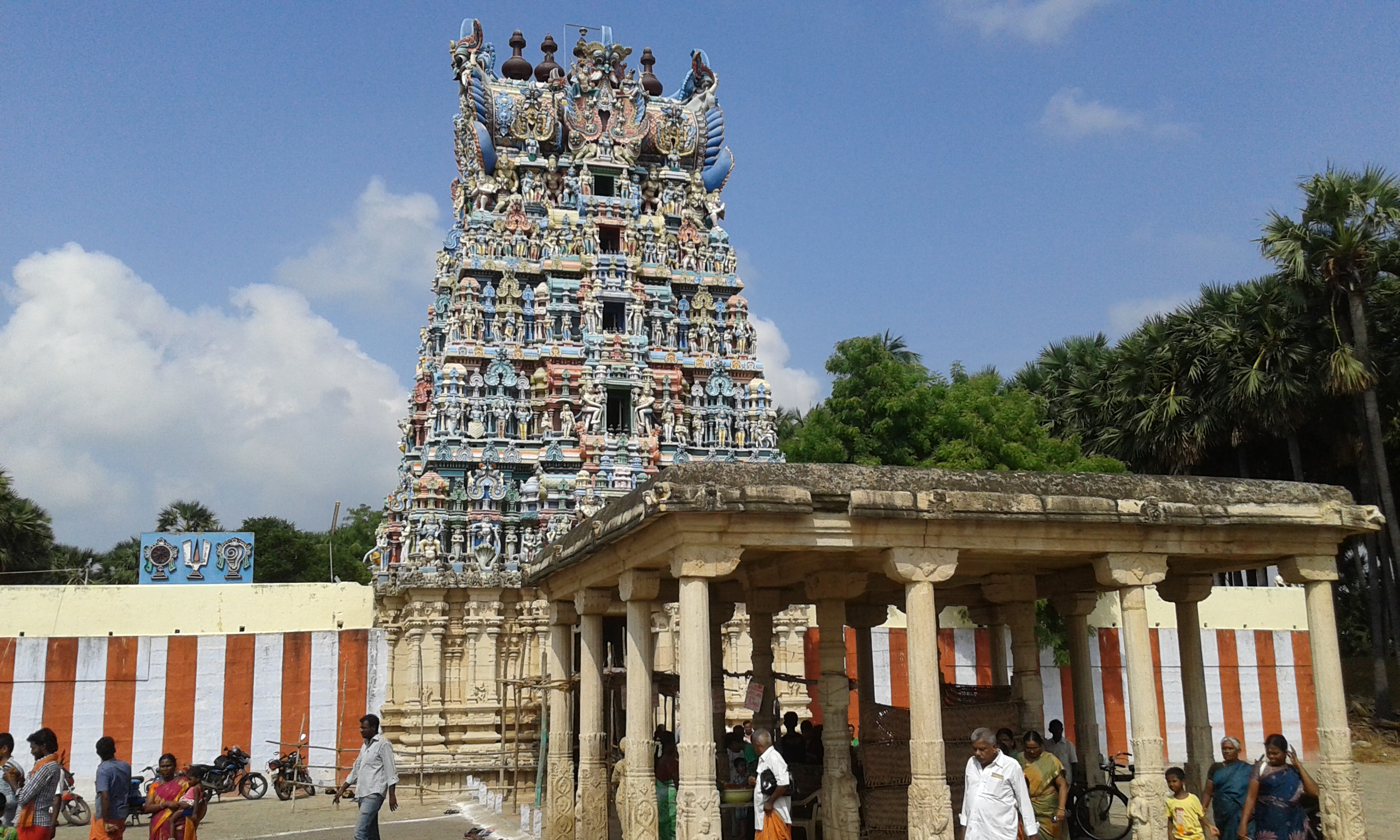
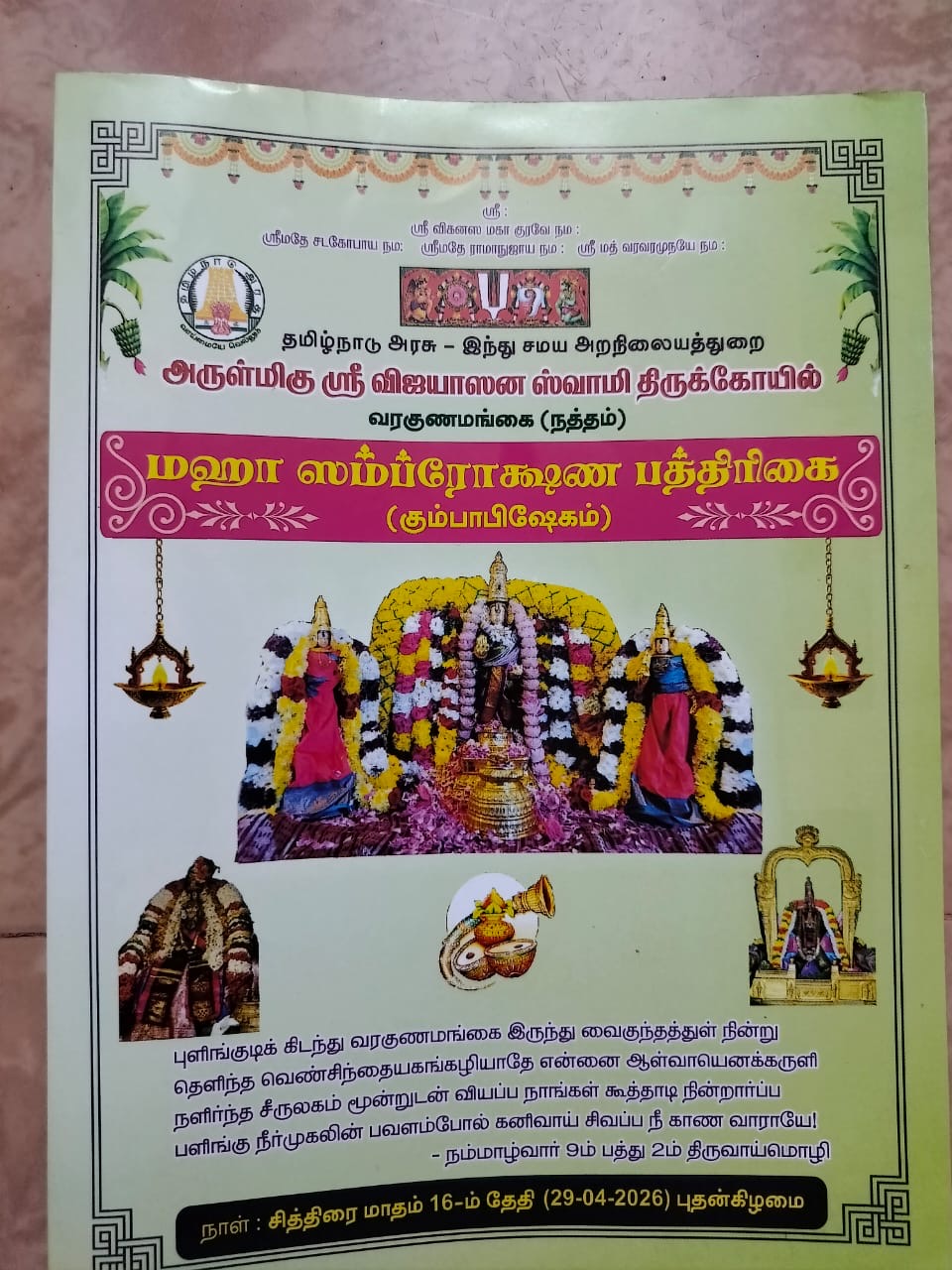
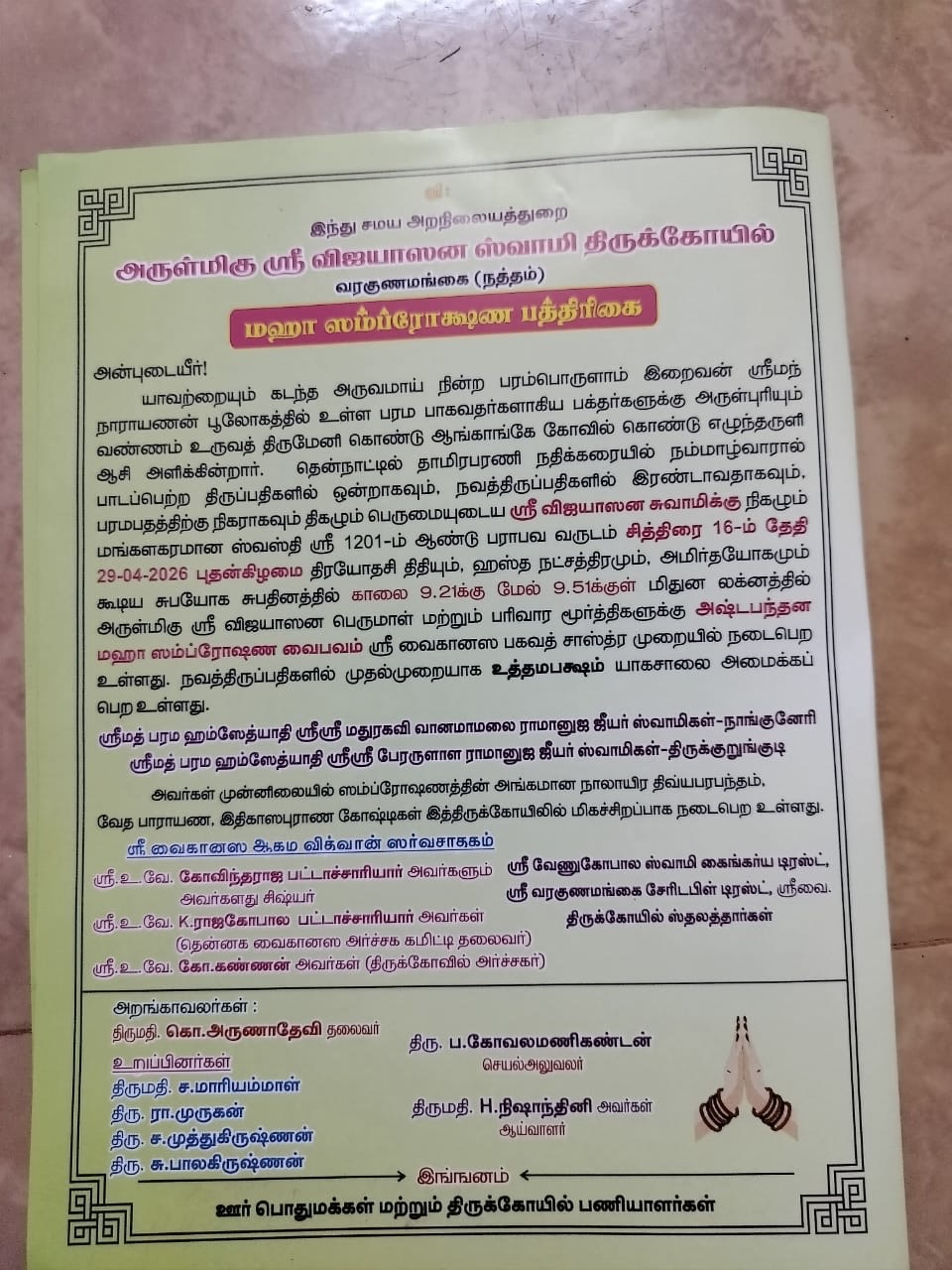
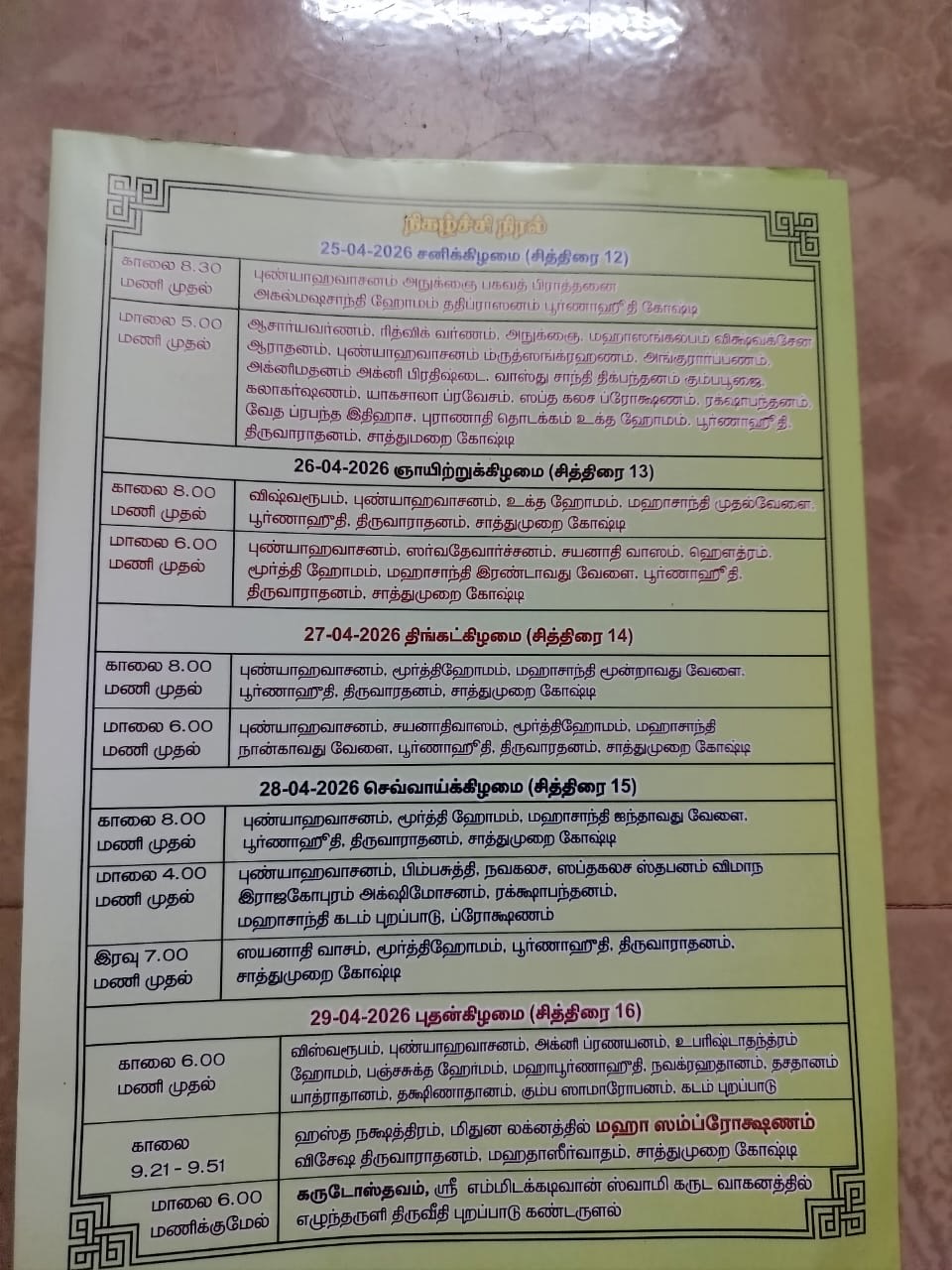
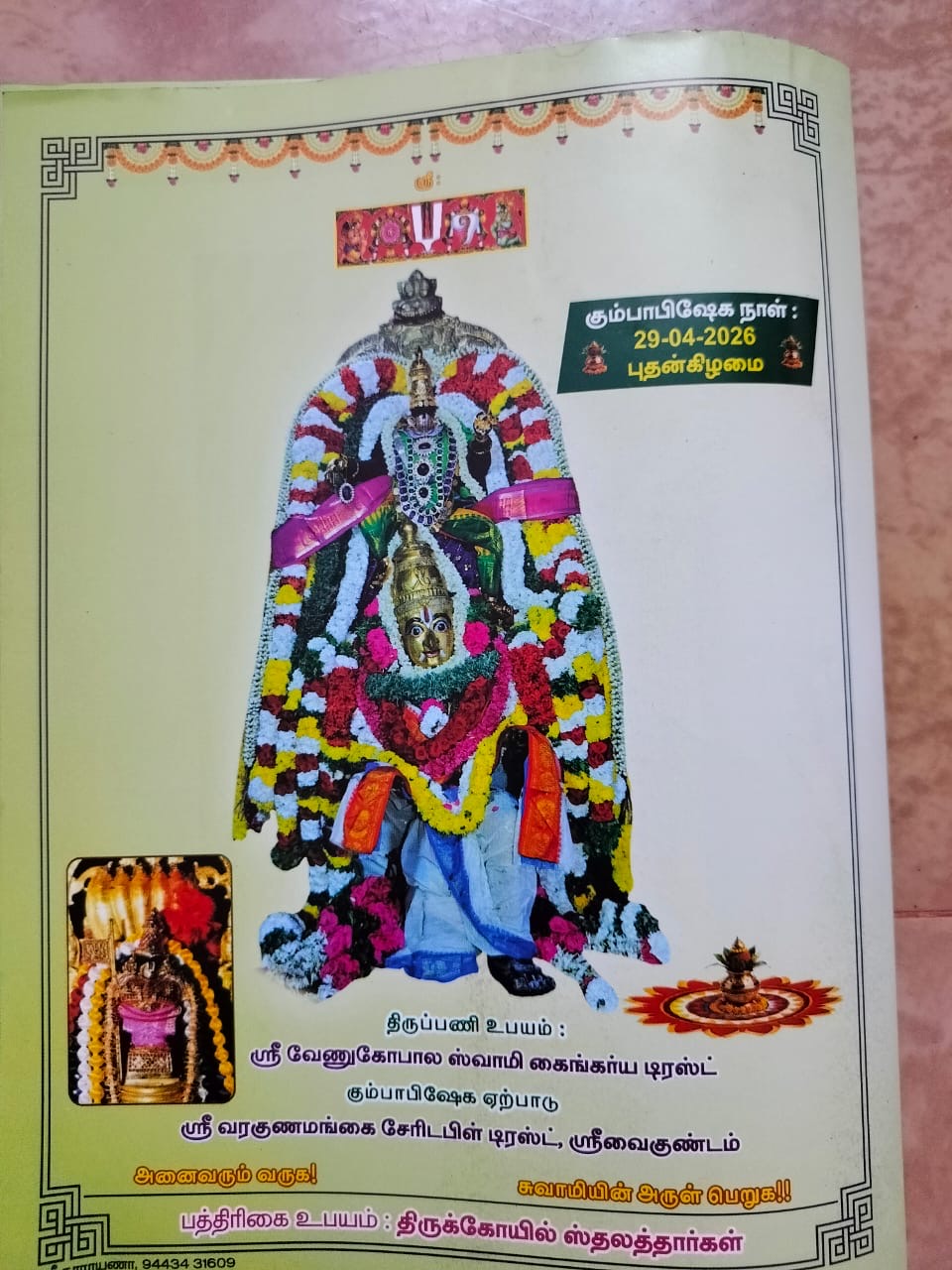
Your offering today supports the Kumbhābhiṣekam of Sri Varaguṇamaṅgai (Nattham) Divya Deśam, helping preserve this sacred temple as a living place of worship and a home for timeless Vaishnava tradition.
📅 Dates: 25 April 2026 – 29 April 2026.
🎉 Main Event: 29 April 2026 (9:21–9:51 AM)
Every contribution aids preparations so devotees can continue to gather, chant, and pray here for generations.
Please give as you are able to uphold this spiritual heritage.
The sacred Śrī Varaguṇamaṅgai (Nattham) Divya Deśam, situated on the banks of the holy Tāmiraparani River, is revered as a powerful kṣetra for the removal of sins (pāpa-vimocana) and the attainment of liberation (mokṣa). The presiding deity, Lord Viṣṇu, manifests here as Vijayāsana Perumāḷ, seated in a majestic posture that signifies divine victory and grace.
According to the purāṇic tradition, a Pāṇḍya king named Varaguṇa once ruled the region with righteousness and devotion. However, due to karmic consequences—either from a previous birth or from unintended actions—he became burdened with grave sins, often described as brahmahatyā doṣa. Despite his power and wealth, the king suffered from deep inner turmoil and spiritual unrest, realizing that worldly means could not relieve his condition.
In search of redemption, Varaguṇa sought guidance from sages, who directed him to the sacred banks of the Tāmiraparani. There, he undertook intense penance, dedicating himself to the worship of Lord Viṣṇu. Renouncing royal comforts, he engaged in continuous recitation of divine names, performed yajñas and homas, observed fasting, and practiced unwavering devotion with complete surrender.
Moved by the king’s sincerity and repentance, Lord Viṣṇu appeared before him at this very site in the form of Vijayāsana Perumāḷ. Seated in a regal and serene posture, the Lord revealed that true devotion and repentance have the power to destroy even the gravest sins. By His grace, the king’s karmic burdens were completely removed, and he attained purity of mind and spirit.
Blessed by the Lord, Varaguṇa ultimately received mokṣa, attaining liberation from the cycle of birth and death. In remembrance of this divine event, the place came to be known as Varaguṇamaṅgai, meaning “the auspicious place where Varaguṇa received divine grace.”
This legend conveys profound spiritual truths: even unintentional sins can bind the soul, but sincere devotion (bhakti), penance (tapas), and complete surrender (śaraṇāgati) lead to redemption. The Lord is celebrated here as the embodiment of compassion, ever ready to uplift those who seek Him with a pure heart.
Śrī Varaguṇamaṅgai is one of the 108 Divya Deśams praised in the Nālāyira Divya Prabandham by Nammāḻvār and forms part of the Nava Tirupati temples, traditionally associated with Chandra (the Moon). Even today, devotees visit this sacred site seeking relief from sins, inner peace, and spiritual upliftment, firmly believing in the transformative grace of Vijayāsana Perumāḷ.